BILLING AND PRICING MODELS
We Handle Every Pricing Model You Can Think of
We Handle Every Pricing Model You Can Think of
Ferry AI agent supports any pricing structure be it usage based or subscription out of the box. Either you can use Ferry AI’s billing tool or we can run on top of your existing billing stack.
Ferry AI agent supports any pricing structure be it usage based or subscription out of the box. Either you can use Ferry AI’s billing tool or we can run on top of your existing billing stack.
Subscription Model
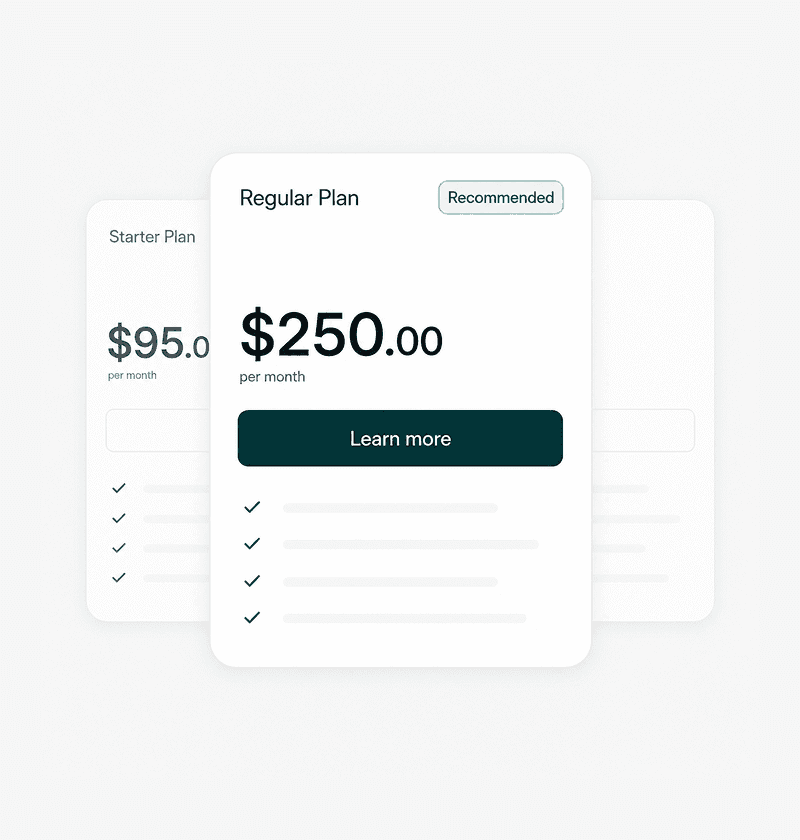
Customers pay a flat recurring fee (monthly, quarterly, annually) for ongoing access to a product or service.
Example: A SaaS tool charges $250/month for access to its platform.
Use cases
Ferry handles
Auto-renewals, prorations, ramped contracts, discounts, and billing terms
Pay as You Go
Customers are charged based only on the amount of product or service they use, with no upfront commitment or minimum spend.
Example: An cloud infrastructure company charges $0.10 per API call, invoiced monthly based on actual usage.
Use cases
Ferry handles
Real-time ingestion of usage data, rating, and invoice generation

Tier-Based
Pricing is structured in tiers, where unit rates change once usage crosses certain thresholds.
Example: First 1,000 messages at $0.10 each, next 9,000 at $0.08, then $0.05 beyond 10,000.
Use cases
Ferry handles
Multiple billing elements on a single invoice and flexible pricing configs

Outcome-Based
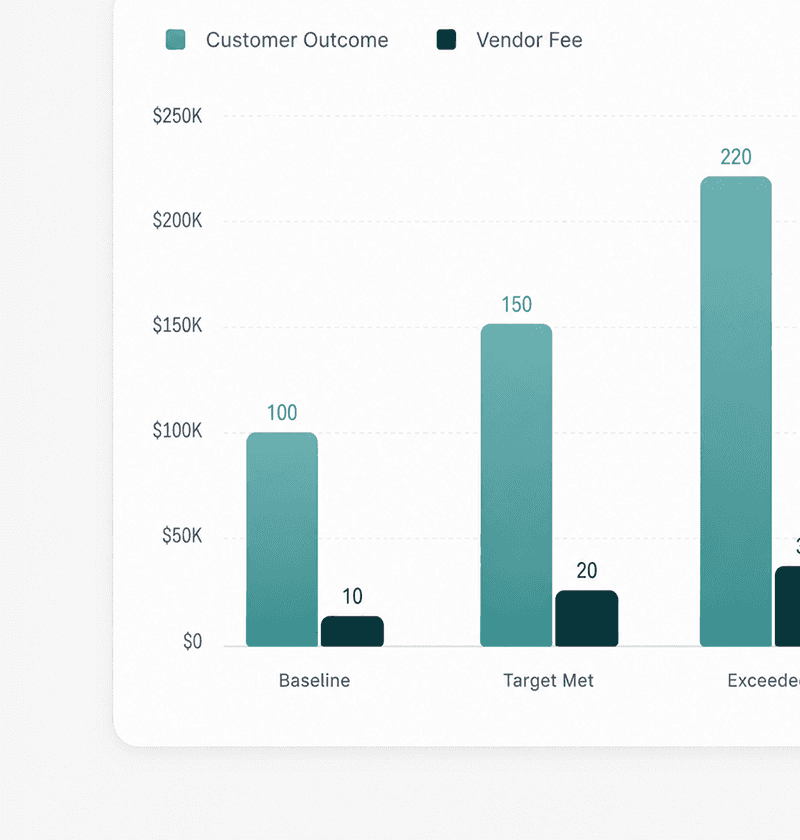
Billing is tied to specific results or performance outcomes, rather than just time or usage.
Example: A support platform charges $0.99 per resolution.
Use cases
Ferry handles
Multiple billing elements on a single invoice and flexible pricing configs
Prepaid Credit-Based
Customers pay in advance for a set amount of credits, which are then consumed as they use the product or service.
Example: A data provider sells $50,000 of prepaid API credits, which customers draw down as they make requests.
Use cases
Ferry handles
Milestone tracking, contract-based triggers, and partial invoicing

Commit Consumption
Customers commit to a minimum spend over a period of time, and their actual usage is tracked against that commitment.
Example: A payments platform requires a $100,000 annual minimum transaction volume, with overages billed at standard rates.
Use cases
Ferry handles
Real-time ingestion of usage data, rating, and invoice generation

Multi-Bucket Commit
A contract includes multiple commitments across different products or services, all tracked and billed under one agreement.
Example: A SaaS tool charges $250/month for access to its platform.
Use cases
Ferry handles
Multiple billing elements on a single invoice and flexible pricing configs

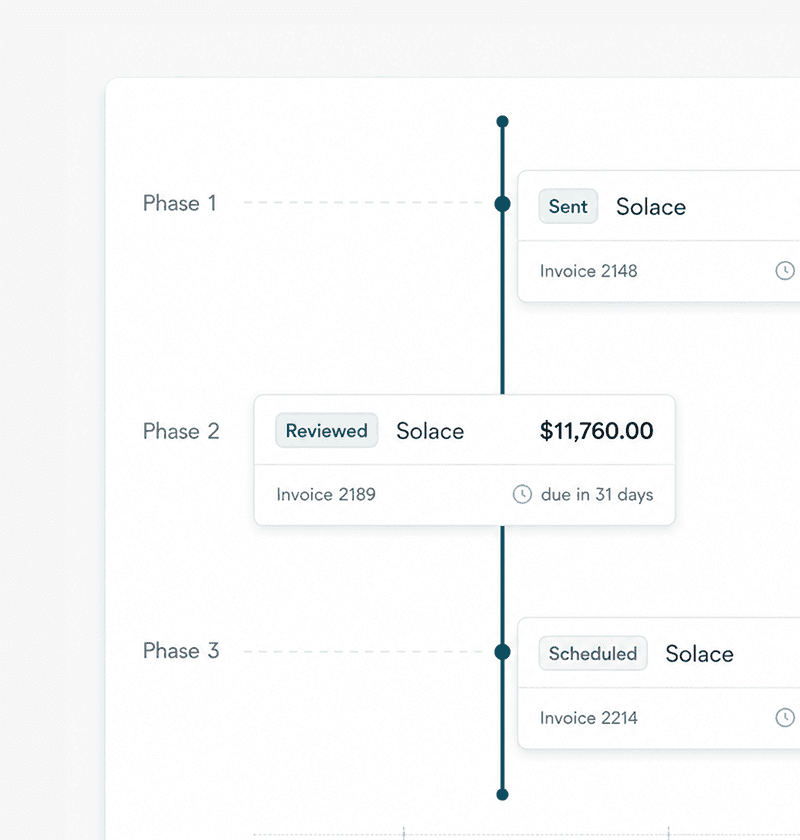
Milestone-Based
Invoices are triggered by the completion of predefined project milestones or deliverables.
Example: A services firm invoices 25% at project kickoff, 25% at design handoff, 50% at launch.
Use cases
Ferry handles
Multiple billing elements on a single invoice and flexible pricing configs
Hybrid
A contract that combines multiple billing models into one such as a base subscription fee plus usage-based overages or product-led growth (PLG) plus sales-led growth (SLG).
Use cases
Ferry handles
Multiple billing elements on a single invoice and flexible pricing configs

Seat Based Billing
Customers are charged based on the number of active seats or licenses tied to their contract, often with dynamic adjustments as teams grow or shrink.
Use cases
Ferry handles
Automated true-ups when seats increase mid-contract, proration options (immediate, co-term, or end-of-period), moving minimums that adjust with contract changes, API-based seat syncs from your product or CRM

Subscription Model
Customers pay a flat recurring fee (monthly, quarterly, annually) for ongoing access to a product or service.
Example: A SaaS tool charges $250/month for access to its platform.
Use cases
Ferry handles
Auto-renewals, prorations, ramped contracts, discounts, and billing terms
Pay as You Go
Customers are charged based only on the amount of product or service they use, with no upfront commitment or minimum spend.
Example: An cloud infrastructure company charges $0.10 per API call, invoiced monthly based on actual usage.
Use cases
Ferry handles
Real-time ingestion of usage data, rating, and invoice generation
Tier-Based
Pricing is structured in tiers, where unit rates change once usage crosses certain thresholds.
Example: First 1,000 messages at $0.10 each, next 9,000 at $0.08, then $0.05 beyond 10,000.
Use cases
Ferry handles
Multiple billing elements on a single invoice and flexible pricing configs
Outcome-Based
Billing is tied to specific results or performance outcomes, rather than just time or usage.
Example: A support platform charges $0.99 per resolution.
Use cases
Ferry handles
Multiple billing elements on a single invoice and flexible pricing configs
Prepaid Credit-Based
Customers pay in advance for a set amount of credits, which are then consumed as they use the product or service.
Example: A data provider sells $50,000 of prepaid API credits, which customers draw down as they make requests.
Use cases
Ferry handles
Milestone tracking, contract-based triggers, and partial invoicing
Commit Consumption
Customers commit to a minimum spend over a period of time, and their actual usage is tracked against that commitment.
Example: A payments platform requires a $100,000 annual minimum transaction volume, with overages billed at standard rates.
Use cases
Ferry handles
Real-time ingestion of usage data, rating, and invoice generation
Multi-Bucket Commit
A contract includes multiple commitments across different products or services, all tracked and billed under one agreement.
Example: A SaaS tool charges $250/month for access to its platform.
Use cases
Ferry handles
Multiple billing elements on a single invoice and flexible pricing configs
Milestone-Based
Invoices are triggered by the completion of predefined project milestones or deliverables.
Example: A services firm invoices 25% at project kickoff, 25% at design handoff, 50% at launch.
Use cases
Ferry handles
Multiple billing elements on a single invoice and flexible pricing configs
Hybrid
A contract that combines multiple billing models into one such as a base subscription fee plus usage-based overages or product-led growth (PLG) plus sales-led growth (SLG).
Use cases
Ferry handles
Multiple billing elements on a single invoice and flexible pricing configs
Seat Based Billing
Customers are charged based on the number of active seats or licenses tied to their contract, often with dynamic adjustments as teams grow or shrink.
Use cases
Ferry handles
Automated true-ups when seats increase mid-contract, proration options (immediate, co-term, or end-of-period), moving minimums that adjust with contract changes, API-based seat syncs from your product or CRM

How Simplismart closed the books 14 weeks faster and made billing traceable for every enterprise customer
How Simplismart closed the books 14 weeks faster and made billing traceable for every enterprise customer
How Simplismart closed the books 14 weeks faster and made billing traceable for every enterprise customer


Explore AI Summary







Resources




Explore AI Summary
Resources
Explore AI Summary
Resources
Explore AI Summary
Resources