Table of Content

Table of Content

Revenue Automation Software That Integrates With Salesforce: A Finance Leader's Buyer's Guide (2026)

Revenue Automation Software That Integrates With Salesforce: A Finance Leader's Buyer's Guide (2026)

Revenue Automation Software That Integrates With Salesforce: A Finance Leader's Buyer's Guide (2026)

Revenue Automation Software That Integrates With Salesforce: A Finance Leader's Buyer's Guide (2026)

Revenue Automation Software That Integrates With Salesforce: A Finance Leader's Buyer's Guide (2026)

• 15 min read

• 15 min read

Manish Choudhary

CEO & Co-founder, Ferry | Flexprice

The deal closes in Salesforce. Then someone opens the signed contract and retypes the terms into your billing system: the tier boundaries, the commitment, the overage rate, the escalator. Next month they will do it again. That person is usually your best finance hire, and this is how their week disappears.

Ending that loop comes down to picking a revenue system that connects to Salesforce the way your contracts are actually written. This guide covers what those connections do, how I evaluated ten platforms, and which one fits which kind of business.

Even though this guide is published on getferry.ai and we're indeed an automated revenue recognition software, this guide isn't biased at all. I've created it after talking to a lot of customers and peers who have shifted to Ferry from these tools, and it's based on my personal experience while working at Aftershoot and while consulting thousands of companies in B2B and SaaS. I've published the evaluation criteria in full below, so you can disagree with how I weighted them and still get use out of the comparison.

Key takeaways

  • "Integrates with Salesforce" describes four architectures: a native app, a closed-won trigger, a two-way record sync, and contract-document ingestion. The label alone won't tell you which one you're getting, so it's worth checking per tool.

  • What decides it is where your billing terms come from, the opportunity record or the signed contract. Flat per-seat deals make those identical. Rate cards with tiers and overages don't.

  • Salesforce CPQ is end of sale, not end of life. Salesforce stopped selling new CPQ licenses, existing customers keep and renew theirs, and Revenue Cloud Advanced is the named successor.

  • Native apps give you one system and one admin skill set. Standalone platforms trade that for pricing-model depth. Both are right, for different businesses.

  • I scored all ten platforms on seven published criteria, Ferry included.

What is revenue automation software?

Revenue automation software runs the money side of a closed deal. It sits downstream of your CRM and next to your ERP, and it handles:

  • Turning a signed agreement into a billing schedule

  • Invoicing, including proration, amendments and mid-term changes

  • Flat, seat-based, tiered, usage-based, milestone and hybrid pricing

  • Payment collection, dunning (the reminder sequence for past-due invoices), and cash application

  • Revenue recognition under ASC 606 and IFRS 15, the standards governing when you can count revenue as earned

  • ARR, deferred revenue, AR aging and DSO reporting

Four adjacent categories land in the same search results:

  • CPQ software works before signature and builds the quote

  • CLM (contract lifecycle management) stores the agreement

  • Subscription billing is a subset focused on recurring charges

  • Revenue lifecycle management is Salesforce's umbrella term for most of the above

Why do you need a Salesforce integration for revenue automation?

Because deal data and money data live in two systems, and until they're connected someone moves information between them by hand. A working integration fixes four things:

  • It stops your team rekeying contract terms from the signed order form into the billing system.

  • It keeps one customer identity across both systems instead of two lists that drift apart.

  • It shows reps and CS the payment status on the account, so they stop asking finance in Slack.

  • It starts billing when the deal closes, without a human remembering to trigger it.

Timing matters too. Salesforce CPQ is end of sale, not end of life: Salesforce has stopped selling new CPQ licenses to new customers, while existing customers keep their licenses, add users, renew and receive support. Salesforce has shifted investment to Revenue Cloud Advanced inside the Agentforce Revenue Management suite, and says there's no forced migration. Still, if you planned to buy Salesforce CPQ as your downstream stack, that option closed for new customers. Ferry, for comparison, reads terms from the contract and turns contracts into invoices directly.

How I evaluated these revenue automation platforms

Seven criteria, applied identically to all ten platforms, Ferry included.

Criterion

What I looked for

Why it matters

Salesforce integration pattern

Which of the four jobs the connector performs

Determines what work the integration removes and what it leaves on your team

Where billing terms originate

Opportunity record, or the signed contract

The strongest single predictor of whether invoices match agreements

Pricing model coverage

Flat, tiered, usage, credits, commitments, milestones, hybrid

A platform that can't model your contract can't bill it correctly

Revenue recognition

Included, sold as an add-on module, or out of scope

Add-on modules mean a second purchase and a second implementation

Pricing transparency

Published tiers, or sales-led with no public figures

Sales-led isn't a flaw, but you should know before you book the call

Implementation shape

Native install, connector configuration, or full implementation

Sets your realistic go-live date and who has to staff it

Who it's built for

Company size and business model the product targets

Most bad software decisions are fit mismatches, not quality mistakes

Everything verified came from vendor documentation and published pricing pages. Where a vendor doesn't publish pricing, the table says so instead of estimating. A missing capability is usually scope, not a defect: RightRev doesn't do billing because it's a revenue recognition sub-ledger, and that focus is the thesis.

Revenue automation software that integrates with Salesforce, compared

Platform

Integration pattern

Billing terms from

Revenue recognition

Starting price

Best for

Salesforce Revenue Cloud

Native (first-party)

Opportunity / order

Via Revenue Cloud Billing

Not published

Salesforce-first orgs with admin capacity

Ferry

Contract ingestion

Signed contract

Included, ASC 606, GAAP, IFRS 15

$1,000/month (Scale)

Usage-based and AI companies with rate-card contracts

Tabs

Contract ingestion

Signed contract

Included

$2,000/month (Launch)

B2B SaaS wanting contract-sourced billing

Zuora

Closed-won trigger

Salesforce CPQ order

Included

Not published

Enterprise subscription and usage metering at scale

Maxio

Two-way sync

Opportunity / subscription

Optional add-on module

$599/month (Grow)

B2B SaaS on flat, tiered and moderate usage pricing

Chargebee

Closed-won to two-way

Quote / opportunity

Add-on module (RevRec)

Not published

Recurring billing depth, PLG and self-serve motions

Nue.io

Native app

Quote / opportunity

Via API to external systems

Not published

Post-CPQ teams wanting quote-to-revenue in Salesforce

Certinia

Native app

Opportunity / order

Included, ASC 606 and IFRS 15

~$150-$250 per user/month (Vendr estimate)

Services businesses standardized on Salesforce

RightRev

Native app

Billing or order source

Included, its entire scope

Not published

Teams needing revenue recognition only, inside Salesforce

HighRadius

ERP-first, API to CRM

ERP / order

Included module

Not published

Large enterprises, typically $1B+ revenue

HighRadius is ERP-first by design. Its published pre-built integrations are SAP, Oracle and Microsoft Dynamics 365, with CRM connection through APIs or connectors, which is coherent for a buyer whose system of record is an ERP.

The integration pattern column is the one to read first, and I break down what those four patterns actually do, with the vendor documentation behind each, after the list.

The 10 best revenue automation platforms that integrate with Salesforce

Salesforce's own product leads, since it's the default for anyone already on the platform. Ferry sits second, and Ferry is our product, which the note at the top of this page covers. Ferry's entry also runs longer than the rest, because this is our site and it's the one product I can be genuinely specific about. Position isn't a quality ranking: the integration pattern and the fit notes under each entry are what should decide this, not the order I happened to list them in.

1. Salesforce Revenue Cloud

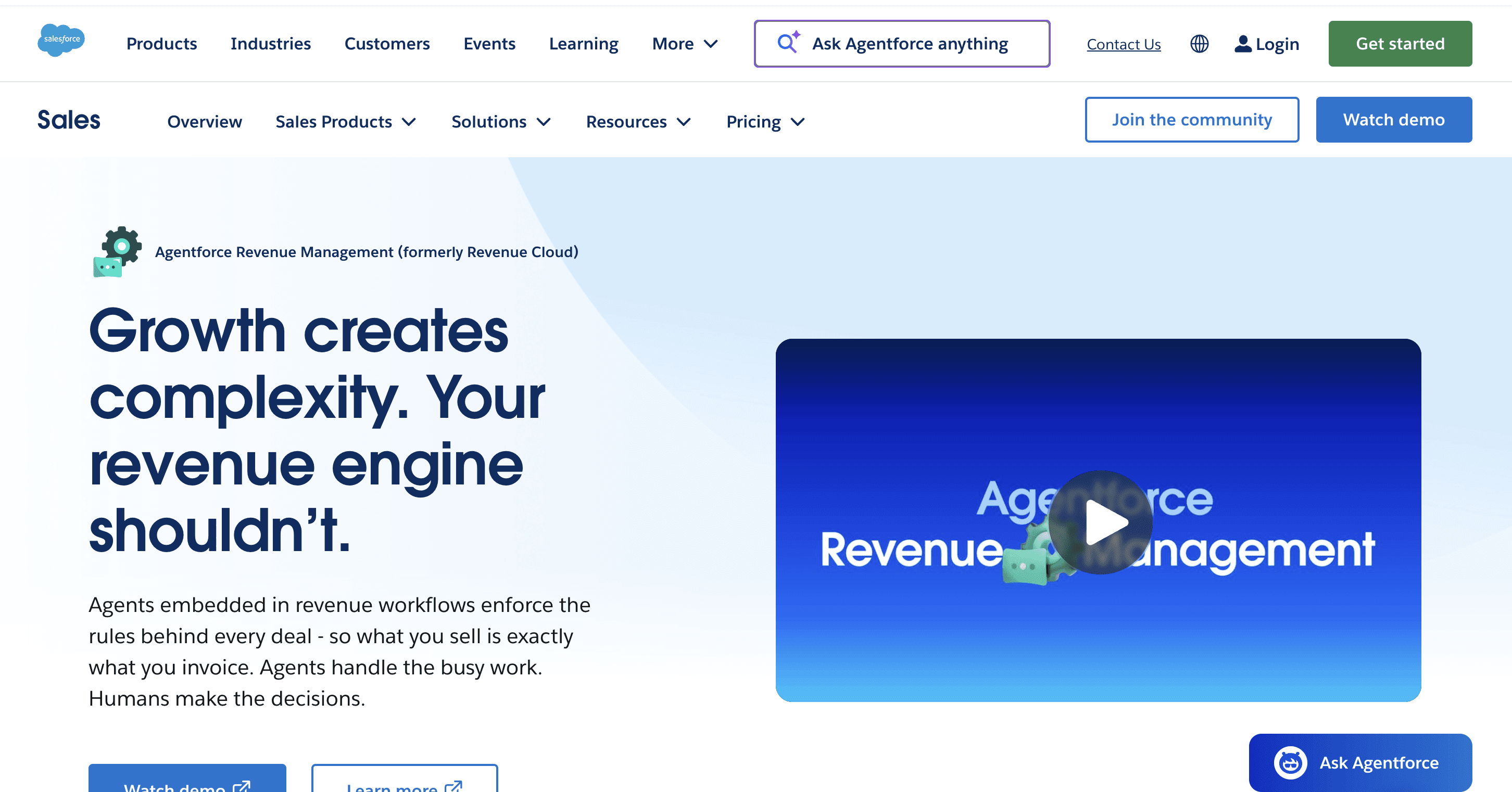
Salesforce's own answer, and the successor to Salesforce CPQ inside the Agentforce Revenue Management suite. Revenue Cloud Advanced covers the upstream revenue lifecycle, and Salesforce describes Revenue Cloud Billing as a separate but complementary product handling usage rating, invoicing, payments and collections, often adopted alongside RCA for a complete quote-to-cash process.

Key features

  • Enterprise product catalog, attribute-based pricing and constraint-based configuration rules

  • Contracting, order management, asset lifecycle, amendments and renewals, exposed through Salesforce screens, APIs, Agentforce and Slack

  • Usage rating, invoicing, payments and collections through the separate Revenue Cloud Billing product

Who it's best for: Salesforce-first orgs with real admin capacity, especially those already committed to a CPQ migration who'd rather consolidate than add a vendor. Pricing isn't published.

2. Ferry

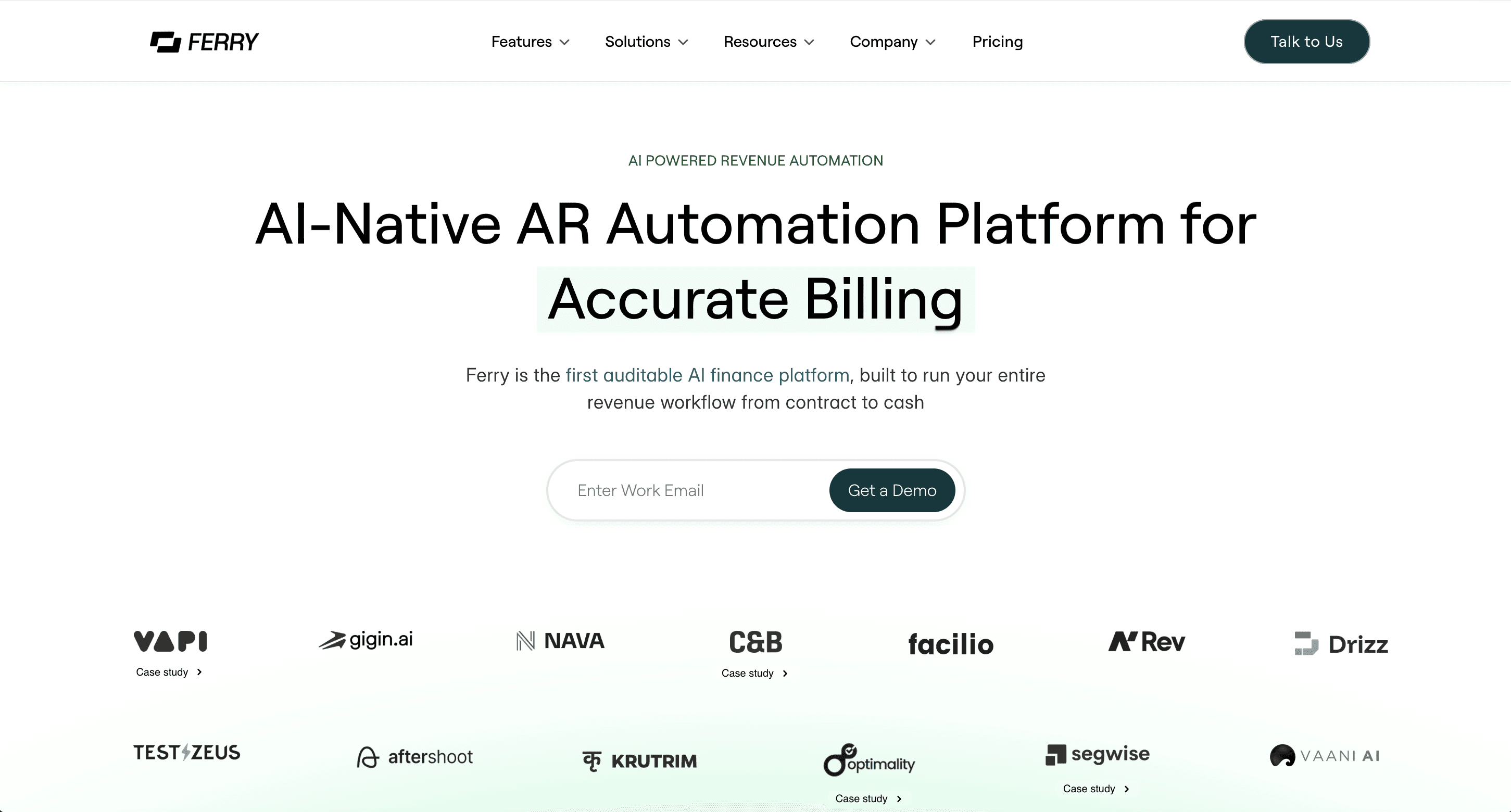
Ferry by Flexprice is an AI-native contract-to-cash platform covering billing, collections, revenue recognition and reporting, with Salesforce listed as a CRM integration. It reads billing terms from the signed contract rather than the opportunity record, with Salesforce supplying the account and deal context. The design bet is auditability: every figure traces back to the clause, usage event or rule that produced it, which is what makes a number defensible when an auditor asks where it came from. It runs on top of your existing billing and ERP stack rather than replacing it, and goes live in about a week.

Key features

  • AI agent pulls price, frequency, milestones and escalators from the signed contract, builds the billing schedule, and recalculates in real time when terms change or amendments land

  • Ten billing models: subscription, pay as you go, tiered, outcome-based, prepaid credit, commit consumption, multi-bucket commit, milestone, hybrid and seat-based

  • ASC 606 revenue recognition plus GAAP and IFRS 15 applied per contract, with journal entries posted to NetSuite, QuickBooks or Sage Intacct and flux validation as part of the close

  • Full audit trail from contract clause to recognition rule to result, for every revenue line

  • Collections in the same platform: dunning sequences per customer type, AI cash application that resolves partial and duplicate payments, and a payment portal taking card, ACH, wire and check

  • Reporting on ARR waterfall, live deferred revenue, cash forecasting, renewal risk and AR aging, every KPI drillable to the contract behind it

  • Developer API, bi-directional ERP sync, SOC 2 Type II

What it looks like in practice: Vapi.ai had model pricing spread across dozens of services, which meant wrong rates were reaching invoices. After centralizing the rate card in Ferry, with usage events flowing in at prompt and completion token granularity, it cut invoice cycle time by 93%. Simplismart tracks 750 pricing dimensions with different rates per customer, sells credits that sit as deferred revenue under ASC 606 and recognizes them as they're consumed, and took 14 weeks out of its month-end close. C&B went from a two-week billing close to same day.

Who it's best for: B2B SaaS and AI companies whose contracts set rate cards, commitments or credit balances rather than a single number, and who want billing, revenue recognition and collections in one system without migrating off their existing stack. Scale is $1,000/month billed annually, up to $5M ARR and 500 active contracts with the AI Billing, Collections and Revenue Agents included; Enterprise is custom above $5M ARR and adds the AI Contract Agent, multi-entity billing and international billing with FX. The boundary worth knowing: Ferry connects to your ERP rather than replacing it, and it doesn't do consumer billing.

3. Tabs

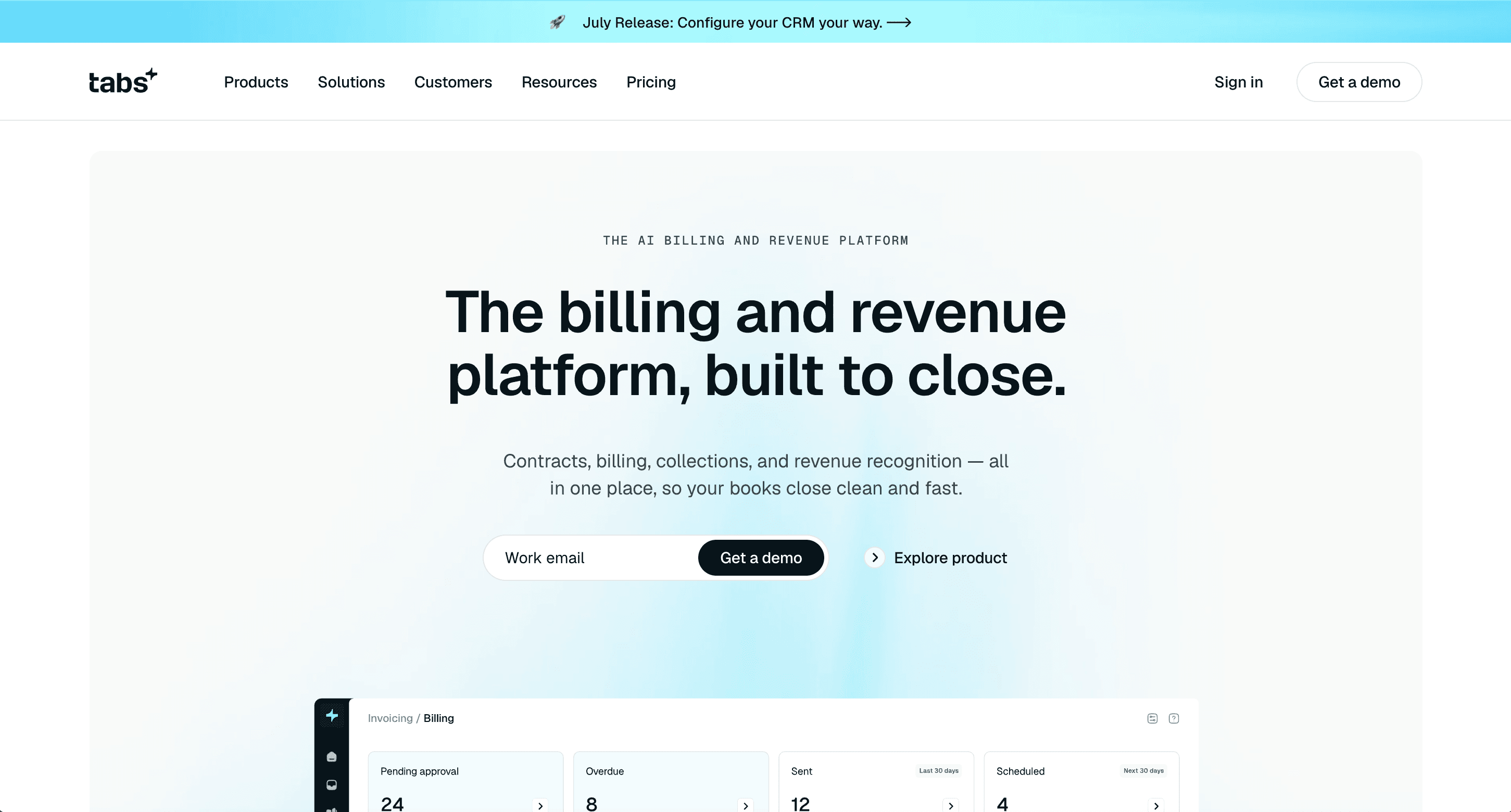
An AI-native contract-to-cash platform reading billing terms out of signed order forms rather than opportunity records. Founded in 2023, it's raised $92M including a $55M Series B in September 2025, and serves 200+ customers including Cursor and Statsig.

Key features

  • AI contract ingestion pulling billing terms from signed order forms

  • Imports closed-won opportunities' contracts from Salesforce automatically

  • Billing, collections, revenue recognition, renewals and reporting in one platform

Who it's best for: B2B SaaS that wants contract-sourced billing at a higher entry price. Launch starts at $2,000/month covering up to $5M annual revenue and 100 active contracts. G2 reviewers praise ease of use and support, and flag tax integration and reporting flexibility as areas they'd like improved.

4. Zuora

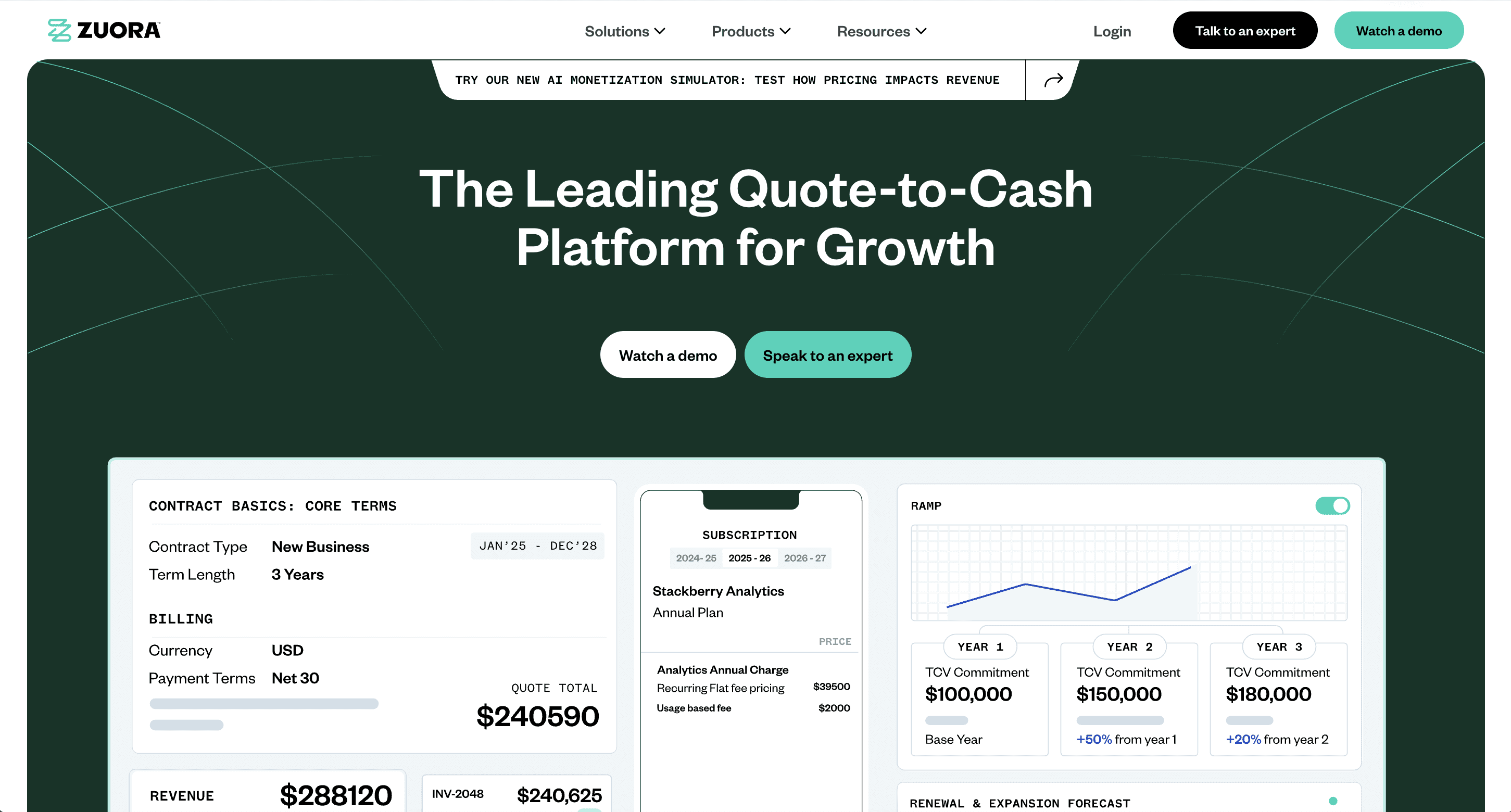
The enterprise incumbent in recurring billing. Zuora announced its recognition as a Leader in the 2025 Gartner Magic Quadrant for Recurring Billing Applications, and it's genuinely strong at metering usage and AI events at volume.

Key features

  • Order-to-cash across quoting, billing, collections, payments and revenue recognition

  • Meters, bills and recognizes revenue for usage and AI events from real-time data

  • Billing Connector for Salesforce CPQ, documented as a single directional sync into Zuora

Who it's best for: Enterprises with high transaction volume and complex subscription structures that have the team to run it. Pricing is sales-led with no published tiers.

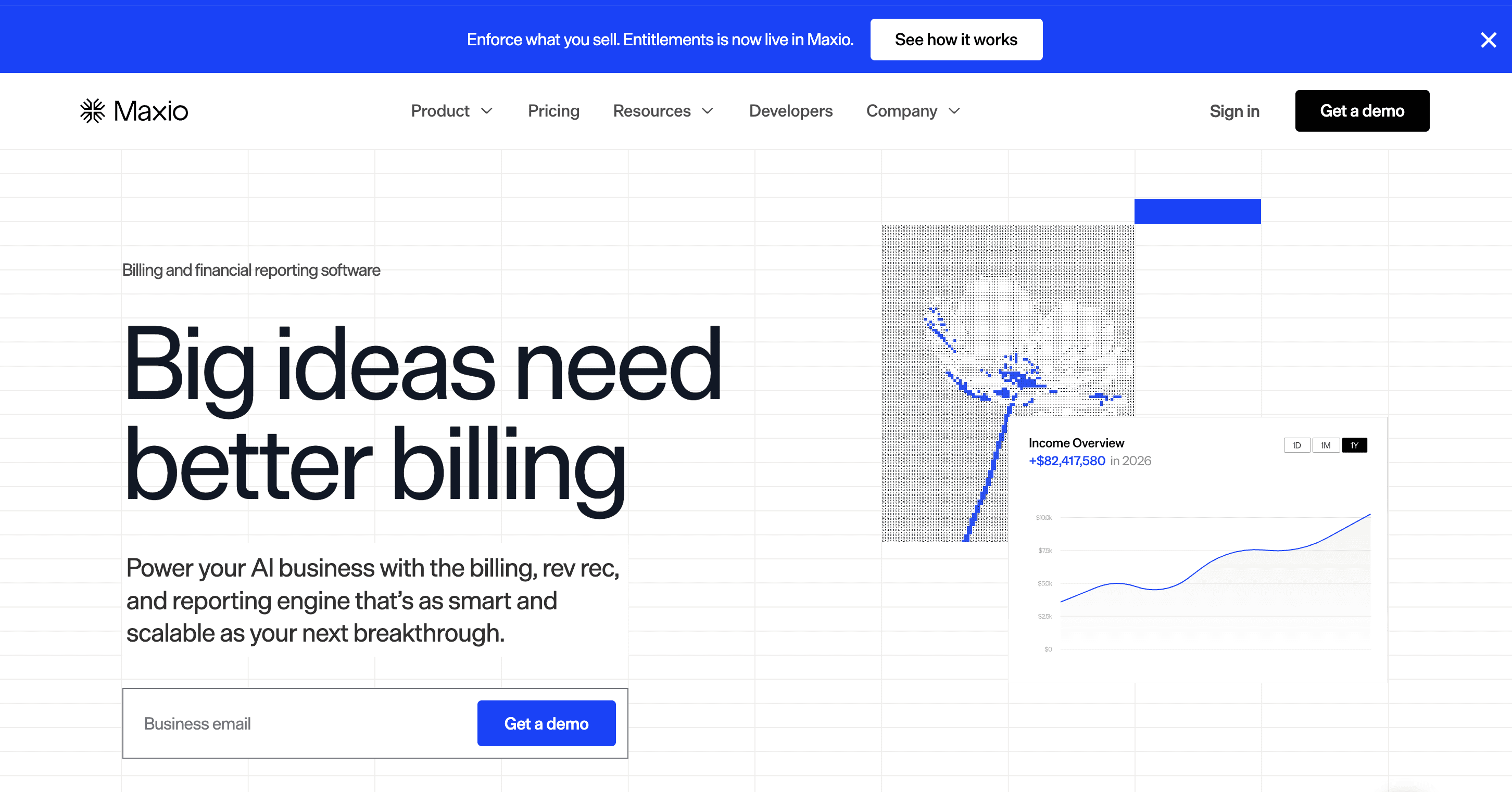
5. Maxio

Out of the SaaSOptics and Chargify merger, Maxio serves 2,300+ customers managing roughly $10B in customer ARR. Its Salesforce connector is the best-documented two-way sync in this comparison.

Key features

  • Two-way Salesforce sync: Accounts and Contacts to customer records, invoice and transaction objects back

  • Products managed through Salesforce Price Books, visible on both sides

  • Flat, tiered, usage-based and hybrid billing

Who it's best for: B2B SaaS on flat, tiered or moderate usage pricing who want reps to see billing state inside Salesforce. Grow starts at $599/month up to $100,000 monthly billings, with revenue recognition as an optional add-on rather than bundled.

The deal closes in Salesforce. Then someone opens the signed contract and retypes the terms into your billing system: the tier boundaries, the commitment, the overage rate, the escalator. Next month they will do it again. That person is usually your best finance hire, and this is how their week disappears.

Ending that loop comes down to picking a revenue system that connects to Salesforce the way your contracts are actually written. This guide covers what those connections do, how I evaluated ten platforms, and which one fits which kind of business.

Even though this guide is published on getferry.ai and we're indeed an automated revenue recognition software, this guide isn't biased at all. I've created it after talking to a lot of customers and peers who have shifted to Ferry from these tools, and it's based on my personal experience while working at Aftershoot and while consulting thousands of companies in B2B and SaaS. I've published the evaluation criteria in full below, so you can disagree with how I weighted them and still get use out of the comparison.

Key takeaways

  • "Integrates with Salesforce" describes four architectures: a native app, a closed-won trigger, a two-way record sync, and contract-document ingestion. The label alone won't tell you which one you're getting, so it's worth checking per tool.

  • What decides it is where your billing terms come from, the opportunity record or the signed contract. Flat per-seat deals make those identical. Rate cards with tiers and overages don't.

  • Salesforce CPQ is end of sale, not end of life. Salesforce stopped selling new CPQ licenses, existing customers keep and renew theirs, and Revenue Cloud Advanced is the named successor.

  • Native apps give you one system and one admin skill set. Standalone platforms trade that for pricing-model depth. Both are right, for different businesses.

  • I scored all ten platforms on seven published criteria, Ferry included.

What is revenue automation software?

Revenue automation software runs the money side of a closed deal. It sits downstream of your CRM and next to your ERP, and it handles:

  • Turning a signed agreement into a billing schedule

  • Invoicing, including proration, amendments and mid-term changes

  • Flat, seat-based, tiered, usage-based, milestone and hybrid pricing

  • Payment collection, dunning (the reminder sequence for past-due invoices), and cash application

  • Revenue recognition under ASC 606 and IFRS 15, the standards governing when you can count revenue as earned

  • ARR, deferred revenue, AR aging and DSO reporting

Four adjacent categories land in the same search results:

  • CPQ software works before signature and builds the quote

  • CLM (contract lifecycle management) stores the agreement

  • Subscription billing is a subset focused on recurring charges

  • Revenue lifecycle management is Salesforce's umbrella term for most of the above

Why do you need a Salesforce integration for revenue automation?

Because deal data and money data live in two systems, and until they're connected someone moves information between them by hand. A working integration fixes four things:

  • It stops your team rekeying contract terms from the signed order form into the billing system.

  • It keeps one customer identity across both systems instead of two lists that drift apart.

  • It shows reps and CS the payment status on the account, so they stop asking finance in Slack.

  • It starts billing when the deal closes, without a human remembering to trigger it.

Timing matters too. Salesforce CPQ is end of sale, not end of life: Salesforce has stopped selling new CPQ licenses to new customers, while existing customers keep their licenses, add users, renew and receive support. Salesforce has shifted investment to Revenue Cloud Advanced inside the Agentforce Revenue Management suite, and says there's no forced migration. Still, if you planned to buy Salesforce CPQ as your downstream stack, that option closed for new customers. Ferry, for comparison, reads terms from the contract and turns contracts into invoices directly.

How I evaluated these revenue automation platforms

Seven criteria, applied identically to all ten platforms, Ferry included.

Criterion

What I looked for

Why it matters

Salesforce integration pattern

Which of the four jobs the connector performs

Determines what work the integration removes and what it leaves on your team

Where billing terms originate

Opportunity record, or the signed contract

The strongest single predictor of whether invoices match agreements

Pricing model coverage

Flat, tiered, usage, credits, commitments, milestones, hybrid

A platform that can't model your contract can't bill it correctly

Revenue recognition

Included, sold as an add-on module, or out of scope

Add-on modules mean a second purchase and a second implementation

Pricing transparency

Published tiers, or sales-led with no public figures

Sales-led isn't a flaw, but you should know before you book the call

Implementation shape

Native install, connector configuration, or full implementation

Sets your realistic go-live date and who has to staff it

Who it's built for

Company size and business model the product targets

Most bad software decisions are fit mismatches, not quality mistakes

Everything verified came from vendor documentation and published pricing pages. Where a vendor doesn't publish pricing, the table says so instead of estimating. A missing capability is usually scope, not a defect: RightRev doesn't do billing because it's a revenue recognition sub-ledger, and that focus is the thesis.

Revenue automation software that integrates with Salesforce, compared

Platform

Integration pattern

Billing terms from

Revenue recognition

Starting price

Best for

Salesforce Revenue Cloud

Native (first-party)

Opportunity / order

Via Revenue Cloud Billing

Not published

Salesforce-first orgs with admin capacity

Ferry

Contract ingestion

Signed contract

Included, ASC 606, GAAP, IFRS 15

$1,000/month (Scale)

Usage-based and AI companies with rate-card contracts

Tabs

Contract ingestion

Signed contract

Included

$2,000/month (Launch)

B2B SaaS wanting contract-sourced billing

Zuora

Closed-won trigger

Salesforce CPQ order

Included

Not published

Enterprise subscription and usage metering at scale

Maxio

Two-way sync

Opportunity / subscription

Optional add-on module

$599/month (Grow)

B2B SaaS on flat, tiered and moderate usage pricing

Chargebee

Closed-won to two-way

Quote / opportunity

Add-on module (RevRec)

Not published

Recurring billing depth, PLG and self-serve motions

Nue.io

Native app

Quote / opportunity

Via API to external systems

Not published

Post-CPQ teams wanting quote-to-revenue in Salesforce

Certinia

Native app

Opportunity / order

Included, ASC 606 and IFRS 15

~$150-$250 per user/month (Vendr estimate)

Services businesses standardized on Salesforce

RightRev

Native app

Billing or order source

Included, its entire scope

Not published

Teams needing revenue recognition only, inside Salesforce

HighRadius

ERP-first, API to CRM

ERP / order

Included module

Not published

Large enterprises, typically $1B+ revenue

HighRadius is ERP-first by design. Its published pre-built integrations are SAP, Oracle and Microsoft Dynamics 365, with CRM connection through APIs or connectors, which is coherent for a buyer whose system of record is an ERP.

The integration pattern column is the one to read first, and I break down what those four patterns actually do, with the vendor documentation behind each, after the list.

The 10 best revenue automation platforms that integrate with Salesforce

Salesforce's own product leads, since it's the default for anyone already on the platform. Ferry sits second, and Ferry is our product, which the note at the top of this page covers. Ferry's entry also runs longer than the rest, because this is our site and it's the one product I can be genuinely specific about. Position isn't a quality ranking: the integration pattern and the fit notes under each entry are what should decide this, not the order I happened to list them in.

1. Salesforce Revenue Cloud

Salesforce's own answer, and the successor to Salesforce CPQ inside the Agentforce Revenue Management suite. Revenue Cloud Advanced covers the upstream revenue lifecycle, and Salesforce describes Revenue Cloud Billing as a separate but complementary product handling usage rating, invoicing, payments and collections, often adopted alongside RCA for a complete quote-to-cash process.

Key features

  • Enterprise product catalog, attribute-based pricing and constraint-based configuration rules

  • Contracting, order management, asset lifecycle, amendments and renewals, exposed through Salesforce screens, APIs, Agentforce and Slack

  • Usage rating, invoicing, payments and collections through the separate Revenue Cloud Billing product

Who it's best for: Salesforce-first orgs with real admin capacity, especially those already committed to a CPQ migration who'd rather consolidate than add a vendor. Pricing isn't published.

2. Ferry

Ferry by Flexprice is an AI-native contract-to-cash platform covering billing, collections, revenue recognition and reporting, with Salesforce listed as a CRM integration. It reads billing terms from the signed contract rather than the opportunity record, with Salesforce supplying the account and deal context. The design bet is auditability: every figure traces back to the clause, usage event or rule that produced it, which is what makes a number defensible when an auditor asks where it came from. It runs on top of your existing billing and ERP stack rather than replacing it, and goes live in about a week.

Key features

  • AI agent pulls price, frequency, milestones and escalators from the signed contract, builds the billing schedule, and recalculates in real time when terms change or amendments land

  • Ten billing models: subscription, pay as you go, tiered, outcome-based, prepaid credit, commit consumption, multi-bucket commit, milestone, hybrid and seat-based

  • ASC 606 revenue recognition plus GAAP and IFRS 15 applied per contract, with journal entries posted to NetSuite, QuickBooks or Sage Intacct and flux validation as part of the close

  • Full audit trail from contract clause to recognition rule to result, for every revenue line

  • Collections in the same platform: dunning sequences per customer type, AI cash application that resolves partial and duplicate payments, and a payment portal taking card, ACH, wire and check

  • Reporting on ARR waterfall, live deferred revenue, cash forecasting, renewal risk and AR aging, every KPI drillable to the contract behind it

  • Developer API, bi-directional ERP sync, SOC 2 Type II

What it looks like in practice: Vapi.ai had model pricing spread across dozens of services, which meant wrong rates were reaching invoices. After centralizing the rate card in Ferry, with usage events flowing in at prompt and completion token granularity, it cut invoice cycle time by 93%. Simplismart tracks 750 pricing dimensions with different rates per customer, sells credits that sit as deferred revenue under ASC 606 and recognizes them as they're consumed, and took 14 weeks out of its month-end close. C&B went from a two-week billing close to same day.

Who it's best for: B2B SaaS and AI companies whose contracts set rate cards, commitments or credit balances rather than a single number, and who want billing, revenue recognition and collections in one system without migrating off their existing stack. Scale is $1,000/month billed annually, up to $5M ARR and 500 active contracts with the AI Billing, Collections and Revenue Agents included; Enterprise is custom above $5M ARR and adds the AI Contract Agent, multi-entity billing and international billing with FX. The boundary worth knowing: Ferry connects to your ERP rather than replacing it, and it doesn't do consumer billing.

3. Tabs

An AI-native contract-to-cash platform reading billing terms out of signed order forms rather than opportunity records. Founded in 2023, it's raised $92M including a $55M Series B in September 2025, and serves 200+ customers including Cursor and Statsig.

Key features

  • AI contract ingestion pulling billing terms from signed order forms

  • Imports closed-won opportunities' contracts from Salesforce automatically

  • Billing, collections, revenue recognition, renewals and reporting in one platform

Who it's best for: B2B SaaS that wants contract-sourced billing at a higher entry price. Launch starts at $2,000/month covering up to $5M annual revenue and 100 active contracts. G2 reviewers praise ease of use and support, and flag tax integration and reporting flexibility as areas they'd like improved.

4. Zuora

The enterprise incumbent in recurring billing. Zuora announced its recognition as a Leader in the 2025 Gartner Magic Quadrant for Recurring Billing Applications, and it's genuinely strong at metering usage and AI events at volume.

Key features

  • Order-to-cash across quoting, billing, collections, payments and revenue recognition

  • Meters, bills and recognizes revenue for usage and AI events from real-time data

  • Billing Connector for Salesforce CPQ, documented as a single directional sync into Zuora

Who it's best for: Enterprises with high transaction volume and complex subscription structures that have the team to run it. Pricing is sales-led with no published tiers.

5. Maxio

Out of the SaaSOptics and Chargify merger, Maxio serves 2,300+ customers managing roughly $10B in customer ARR. Its Salesforce connector is the best-documented two-way sync in this comparison.

Key features

  • Two-way Salesforce sync: Accounts and Contacts to customer records, invoice and transaction objects back

  • Products managed through Salesforce Price Books, visible on both sides

  • Flat, tiered, usage-based and hybrid billing

Who it's best for: B2B SaaS on flat, tiered or moderate usage pricing who want reps to see billing state inside Salesforce. Grow starts at $599/month up to $100,000 monthly billings, with revenue recognition as an optional add-on rather than bundled.

Get Paid, Much Faster with Ferry AI

Get Paid, Much Faster with Ferry AI

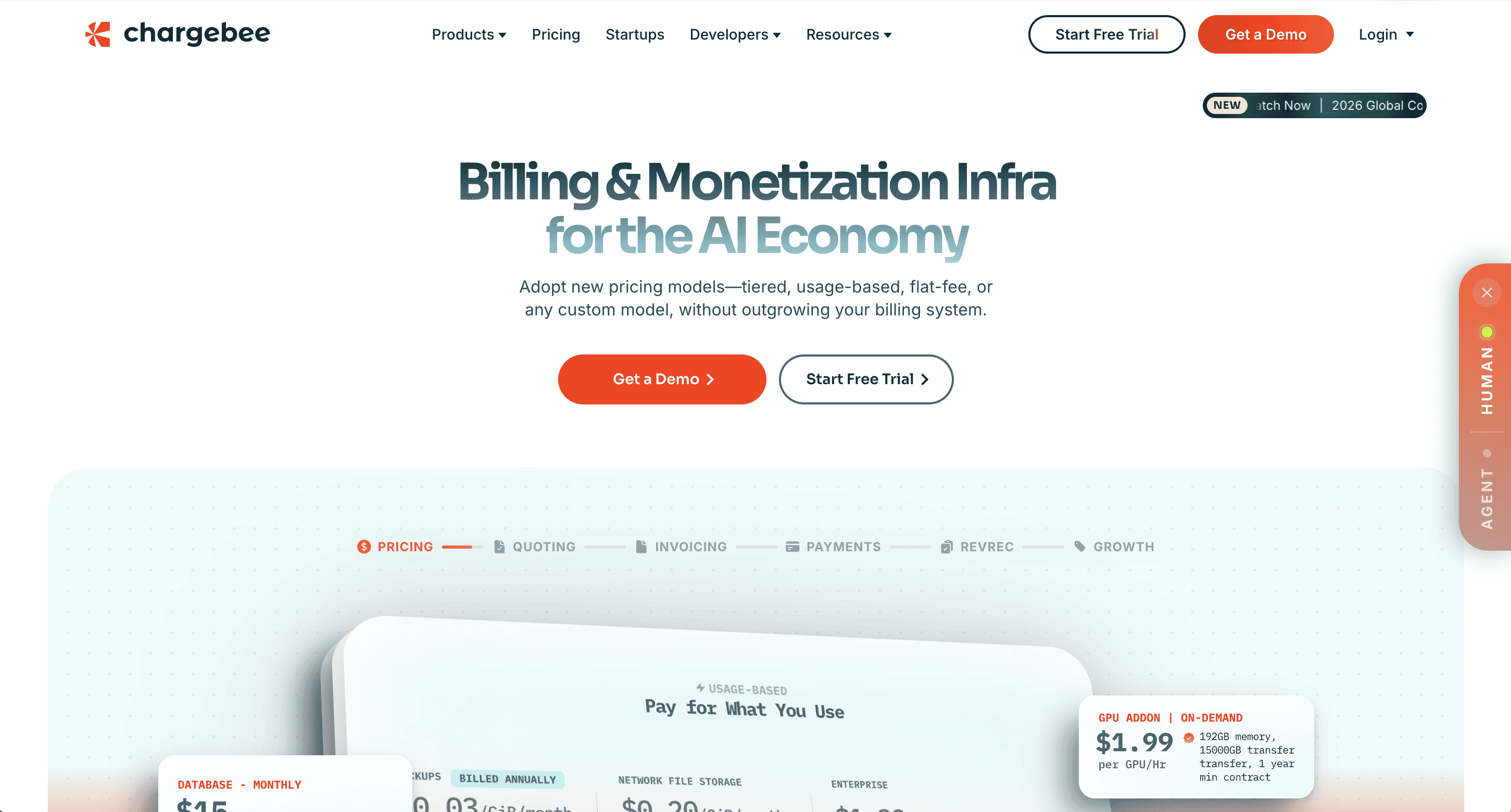
6. Chargebee

Deep recurring billing and subscription management, with a Salesforce integration that turns a won quote into a subscription and starts collection automatically. It layers onto Salesforce CPQ, or replaces it with Chargebee CPQ.

Key features

  • Recurring billing and subscription management with strong self-serve support

  • Converts won Salesforce quotes into subscriptions and begins collection automatically

  • Chargebee RevRec for ASC 606 and IFRS 15, sold as a separate add-on module

Who it's best for: Companies with self-serve or PLG motions alongside sales-led deals, where billing volume and payment recovery matter as much as contract complexity. Budget for RevRec separately.

7. Nue.io
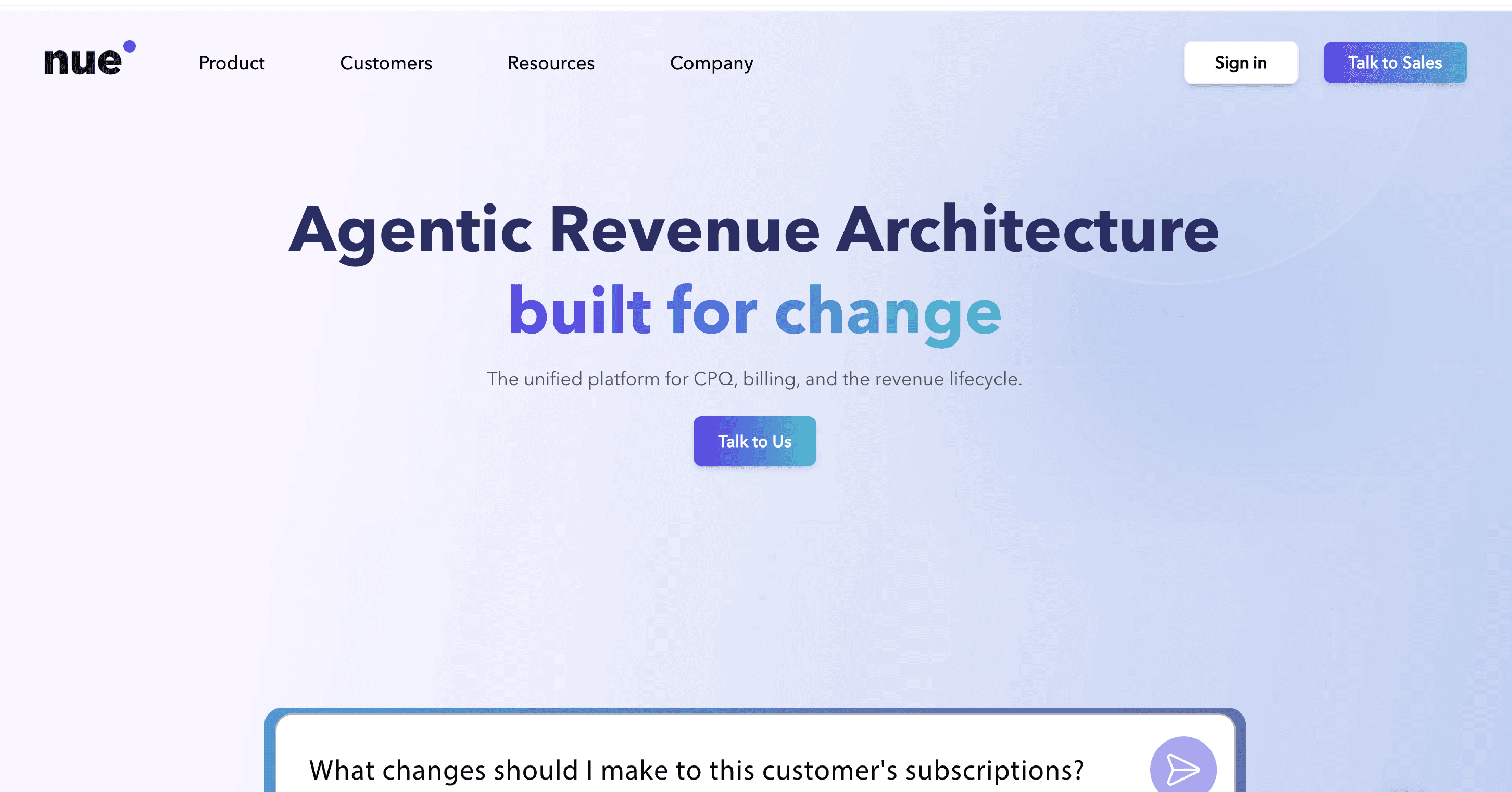
A Salesforce-native quote-to-revenue platform spanning CPQ through billing, usage, credits and collections. It aims at teams deciding what to do after Salesforce CPQ, and it's one of the few native options treating usage-based components as first-class in the quote.

Key features

  • Native Salesforce CPQ with guided selling, validation and business-rule enforcement

  • Tiered pricing, discounts, multi-variable pricing and usage-based components

  • Subscription lifecycle management including upgrades, downgrades and add-ons

Who it's best for: SaaS revenue teams who want the full quote-to-revenue motion inside Salesforce, particularly those replacing Salesforce CPQ. Pricing isn't published.

8. Certinia
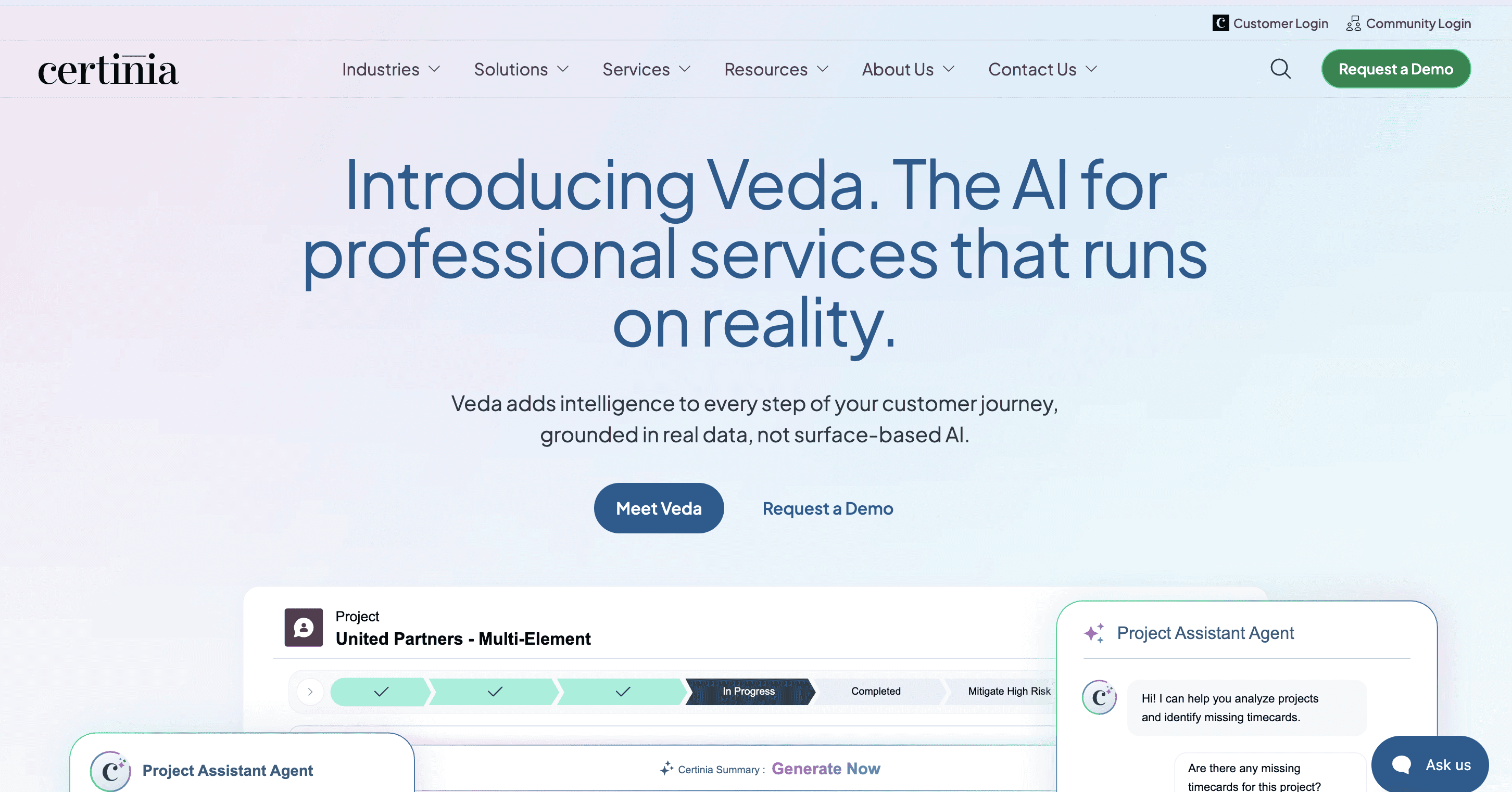
A Salesforce-native ERP suite, so billing and revenue recognition sit alongside general ledger, AP and AR in the same org. Its roots are in professional services, and the project accounting depth shows.

Key features

  • Built natively on the Salesforce Platform, connecting directly to Salesforce CRM

  • Subscription and usage-based billing with central pricing and contract-term configuration

  • ASC 606 and IFRS 15 revenue recognition schedules native to the platform

Who it's best for: Services and hybrid software-plus-services companies standardized on Salesforce that want financials in the same system. Vendr's data puts mid-market ERP licenses around $150 to $250 per user per month, a third-party figure rather than a published price.

9. RightRev

RightRev does revenue recognition and nothing else, as a Salesforce-native, no-code sub-ledger embedded in the platform. Its dedicated Revenue Cloud Advanced build makes it a common pairing for teams who like Salesforce's upstream but want a purpose-built engine underneath.

Key features

  • Salesforce-native revenue sub-ledger with no-code configuration

  • ASC 606 and IFRS 15 revenue recognition for complex contract structures

  • Dedicated integration built for Salesforce Revenue Cloud Advanced

Who it's best for: Companies that already have billing solved and need revenue recognition that holds up under audit. If you need billing too, you're buying two products. Pricing isn't published.

10. HighRadius

An enterprise autonomous finance suite covering order-to-cash, record-to-report, AP and treasury, with a revenue recognition module and a mature agentic AI layer in collections. The most operationally deep platform here.

Key features

  • 15 collections agents (9 fully automated, 6 assisted), with automated logins to 600+ AP customer portals

  • ASC 606 and IFRS 15 revenue recognition module with audit-ready logs and exception handling

  • Pre-built ERP integrations for SAP, Oracle and Microsoft Dynamics 365

Who it's best for: Large enterprises, typically $1B+ revenue, running an ERP as the system of record with a team available for a 3 to 6 month implementation. Pricing isn't public.

What does "integrates with Salesforce" actually mean?

One of four jobs, and knowing which one you're getting changes what work the integration actually takes off your team. That integration pattern column in the table above is doing a lot of work, so here's what each one means, with the vendor documentation behind it.

Pattern 1: native Salesforce apps. The software runs on the Salesforce Platform, so data lives in Salesforce objects and reports are Salesforce reports. Certinia, RightRev and Nue.io work this way; Revenue Cloud is the first-party version. You get one system, one skill set, and no sync to debug at 11pm before close.

Pattern 2: closed-won triggers and one-way sync. An opportunity flips to Closed Won and a subscription or invoice gets created downstream. Zuora documents its Billing Connector for Salesforce CPQ as a single directional sync into Zuora, with CPQ X sold separately for bi-directional quoting. You get predictability, and simple integrations break less often.

Pattern 3: two-way record sync. Accounts, contacts and products flow in; subscriptions, invoices and payments flow back. Maxio documents this down to products managed through Salesforce Price Books. You get reps and CS seeing billing state without leaving the CRM, which kills a lot of Slack traffic.

Pattern 4: contract-document ingestion. Billing terms come from the signed agreement, and Salesforce supplies account and deal linkage rather than pricing. Tabs imports closed-won opportunities' contracts, and Ferry works the same way. You get an invoice matching the contract rather than whatever got typed into a field three weeks ago.

Which pattern do you need? Start with where your billing terms live

The four differ on one variable: whether your billing terms originate in the opportunity record or in the signed contract.

Sell flat subscriptions or per-seat licenses and the opportunity line item describes the deal completely. Quantity, price, term, done. Patterns 1 through 3 all work, and CRM-as-origin is honestly the simpler architecture. I'd take it.

Sell a rate card with tiers, a commitment, an overage rate and a drawdown credit balance, and the opportunity holds a summary while the contract holds the terms. Simplismart ran 750 pricing dimensions, each with different rates per customer. No opportunity record holds that. Once you're selling hybrid contract billing, the question stops being preference and starts being whether the invoice can be right at all.

This is a fit question, not a quality ranking. A tool that sources billing from the CRM isn't worse than one that reads contracts, it's built for a different deal shape. The failure mode I keep seeing is a company buying for the deal shape it had two years ago, which is a version of Ferry's point about order to cash automation: automating a step isn't the same as automating the process.

How to choose revenue automation software for your Salesforce stack

Answer four questions in order and your shortlist mostly writes itself.

  1. Where do your billing terms live? If the opportunity holds every term you'd need to build the invoice, patterns 1 through 3 are open. If not, you want contract ingestion.

  2. How complex is your pricing? Flat and tiered subscriptions are well served by almost everything here. Usage, commitments, drawdown credits and hybrid structures narrow the field fast.

  3. What shape does revenue recognition need? Included, a paid add-on, or a separate sub-ledger. Each carries a different total cost.

  4. What's your Salesforce admin capacity? Native apps assume you can staff Salesforce work, and that assumption is where a lot of these projects quietly fail.

Should you keep revenue on the Salesforce platform or run it alongside?

Both are defensible, and the native path is more appealing than people selling standalone tools usually let on. Stay on the platform when your pricing is flat, per-seat or lightly tiered, you have genuine Salesforce admin capacity, and sales, CS and finance all work inside Salesforce every day. Run revenue automation alongside it when your contracts set rate cards, commitments or milestone schedules, your usage volume needs a system built to meter it, or you want revenue recognition included rather than assembled from a sub-ledger.

Partners who run Salesforce CPQ to Revenue Cloud Advanced migrations describe them as reimplementations, with Apex, quote calculator plugins and price rules needing rebuild. Those are partner-reported observations, not Salesforce-published ones. If you're staffing a project that size, that's the moment to ask whether the destination is still right.

Then check where journal entries post and how they reconcile against your general ledger. For the view beyond the Salesforce filter, the best accounts receivable software roundup drops the integration constraint.

Getting your Salesforce data to match your invoices

Every platform here integrates with Salesforce. That was never the useful question. The useful question is whether your billing terms start life in an opportunity record or a signed contract, and once you answer it honestly, most of the shortlist eliminates itself.

Here's the test I'd run this week. Pull your most complicated signed contract and open the matching opportunity record next to it. Go term by term. Does the opportunity hold the tier boundaries, the commitment, the overage rate, the credit balance, the escalator? If it does, buy the simpler architecture and don't overthink it. If it doesn't, you've found the gap someone on your team closes manually every month. That gap is what platforms like Ferry exist to close, so book a demo and bring the contract with you.

Frequently Asked Questions

Frequently Asked Questions

Does Salesforce have built-in billing and revenue automation?

What happened to Salesforce CPQ and Salesforce Billing?

Can revenue automation software handle usage-based pricing from Salesforce?

How much does revenue automation software that integrates with Salesforce cost?

Manish Choudhary

Manish Choudhary

Manish Choudhary is the CEO and Co-founder of Ferry AI and Flexprice.io, the open-source billing engine helping AI and SaaS companies monetize faster. He writes about pricing, product-led growth, and the future of revenue automation

Manish Choudhary is the CEO and Co-founder of Ferry AI and Flexprice.io, the open-source billing engine helping AI and SaaS companies monetize faster. He writes about pricing, product-led growth, and the future of revenue automation

Share it on:

Scale your Revenue with Ferry AI

Summarize this blog on:

Scale your Revenue with Ferry AI

More insights on billing

More insights on billing